

Canada has the longest Arctic coastline in the world, stretching nearly 160,000 kilometres, from Baffin Bay in the East, through islands in the central Arctic Archipelago, to the Mackenzie River delta in the West.
These waters connect all four settled Inuit land claim agreement regions and provide habitat for most of the world’s beluga whales, narwhal, bowhead whales and polar bears, supporting some of the greatest marine mammal and seabird migrations on the planet.
Indigenous Protected Areas (IPAs)
The key to unlocking the potential for meeting conservation goals in Canada’s Arctic Ocean are the four Inuit land claims across the North. They provide additional legal capacity for conservation of important marine areas by directly involving Inuit communities in the nomination, selection, designation and management of ocean conservation areas.
Such indigenous marine protected areas were recommended in 2017 by Mary Simon, the Minister’s Special Representative on Arctic Leadership. Her final report described Indigenous protected areas as:
“…based on the idea of a protected area explicitly designed to accommodate and support an Indigenous vision of a working landscape. This kind of designation has the potential to usher in a broader, more meaningful set of northern benefits and bring definition to the idea of a conservation economy. For example, Indigenous protected areas have the potential to serve as a platform for developing culturally-appropriate programs and hiring of Indigenous peoples in a wide range of service delivery.”
In addition to the slow pace of conventional federal conservation, Simon’s report found that a crucial challenge to achieving marine protections in the North is that many projects do not contemplate the roles that community wellness, employment and prosperity play in environmental stewardship.
In her discussions with Inuit, Simon found that “there is an expectation that Arctic conservation is tied to building and maintaining strong and healthy communities.” To achieve such a result, Indigenous protected areas (IPAs) and Arctic coastal Guardians programs can build “protected area[s] explicitly designed to accommodate and support an Indigenous vision of a working landscape.”
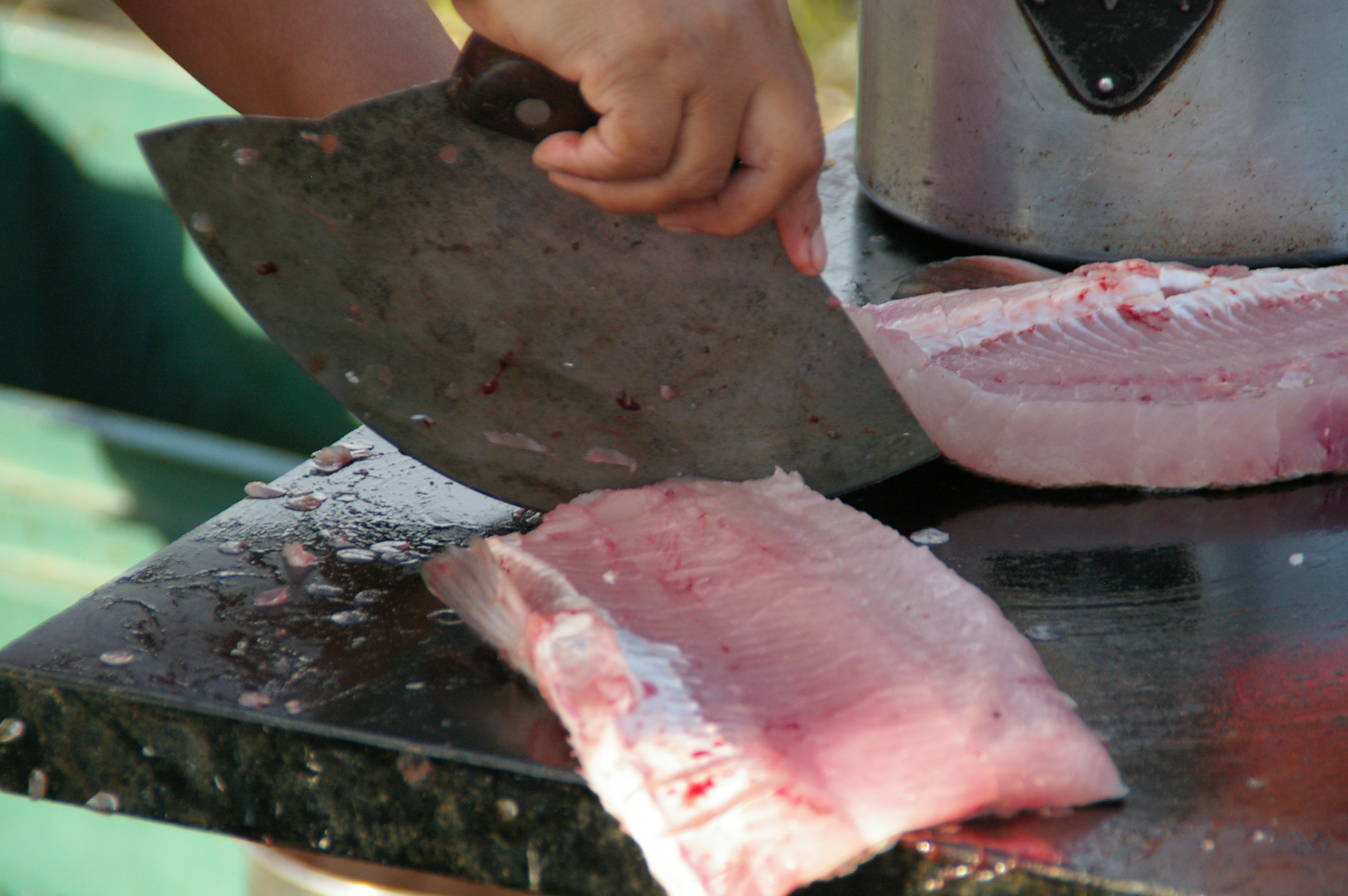
Using an Ulu to prepare Arctic Char.
Credit: Henry Huntington
Opportunities
Canada has the opportunity to significantly increase the number of protected marine areas in the Arctic. Oceans North supports Canada’s commitment to protect 10 per cent of its waters by 2020. To achieve this important goal, the full participation of Inuit is essential and required under land claims agreements. Canada can continue toward its marine conservation targets, in partnership with Inuit regions, by advancing protections for previously identified areas such as Tallurutiup Imanga and Pikialasorsuaq (the North Water Polynya). To truly unlock the potential of the region for conservation and jobs and meet the spirit and letter of Inuit land claims, Canada should consider a new Indigenous protected area policy for Arctic marine areas.