Beaufort Sea
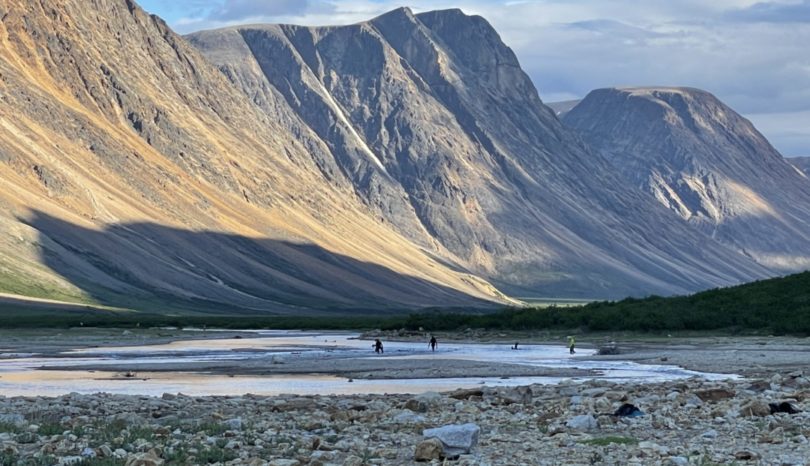
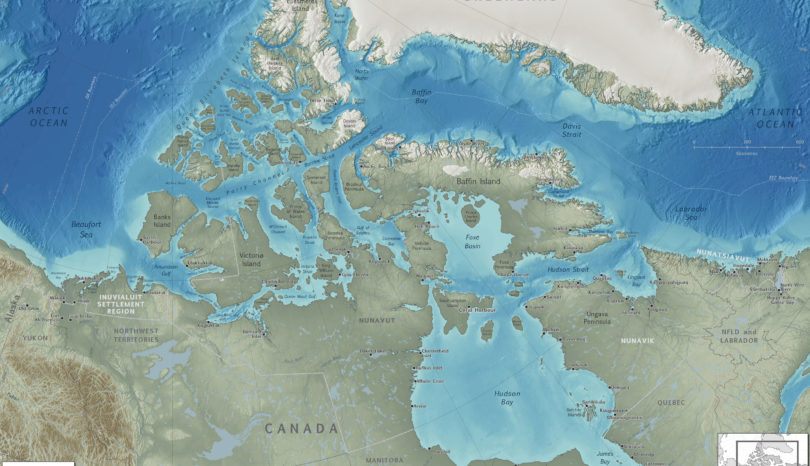
A hotspot of biological productivity, the Canadian Beaufort sprawls over 833,000 square kilometres (322,000 square miles) off the coasts of the Northwest Territories and Yukon. Nutrients from the Pacific Ocean mix over a shallow continental shelf with the Mackenzie River plume, the most sediment-rich waterway in the Arctic. Large open-water areas in sea ice called polynyas – such as the one at Cape Bathurst in the southeast Beaufort – provide crucial habitat for ice-dependent species.
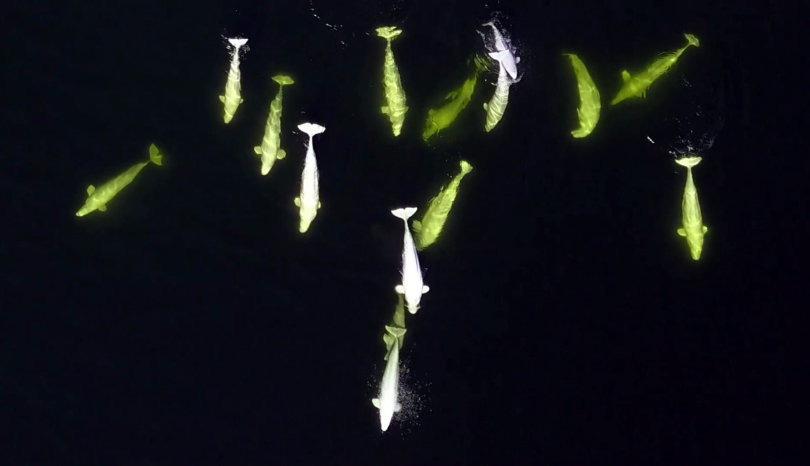
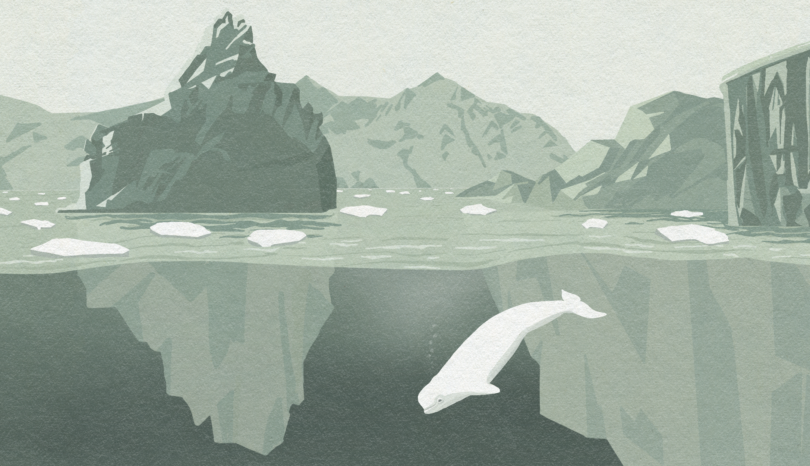
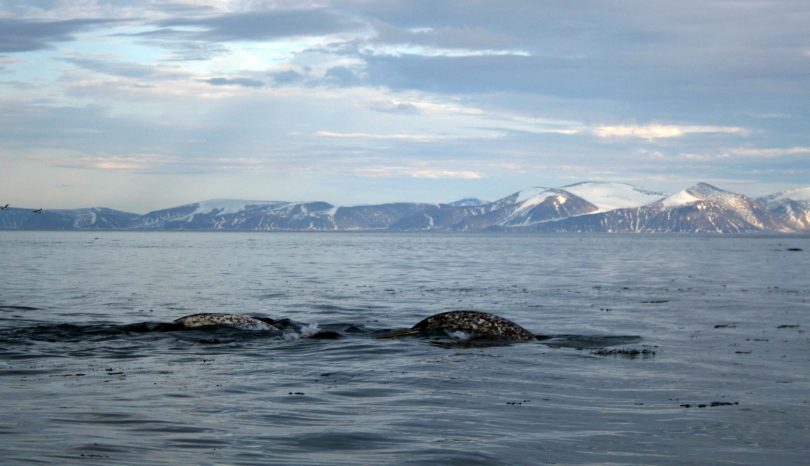
As a result, the Canadian Beaufort is home to the largest stock of beluga whales in the world and is a primary endpoint for over 10,000 migrating bowhead whales. Seventy-one species of fish – including Dolly Varden, wolfish, Arctic cod, Arctic char, Cisco, whitefish and Pacific herring – swim in its waters. Its estuaries, wetlands and coasts are an international destination for millions of seabirds, including northern pintail, brant, long-tailed duck, thick-billed murre and lesser snow goose. Three large areas in the Mackenzie River Delta are internationally recognized as among the most productive wetlands in the world.
The Beaufort has provided spiritual and physical sustenance to indigenous people for thousands of years. Six Inuvialuit communities continue to hunt, fish and gather the Beaufort’s biological riches. However, climate change is altering the ecological balance of the Beaufort in ways humans have not witnessed, warming the oceans and melting the pack ice. Even scientists and Inuvialuit hunters don’t know how ecosystem restructuring will change the Beaufort in coming decades.
Mackenzie River Delta
© NASA Landsat data
The Inuvialuit Final Agreement of 1984 was the first land claim settled north of the 60th parallel in Canada. Under the agreement, Inuvialuit have the right to fully participate in decisions about conservation and economic development related to the Beaufort. Participation takes place through the Inuvialuit Regional Corporation and four co-management boards established by the final agreement.
Arctic loon and chick
© R. Bergman, USFWS
Recently, the Standing Senate Committee on Fisheries and Oceans issued a report endorsing this approach:
"The Committee recommends that the Government of Canada, in concert with the Inuvialuit, develop a policy regarding future fishing activity in the Beaufort Sea. In this regard, Canada should consider instituting a moratorium on commercial fishing in the Beaufort Sea (similar to the US Arctic Fishery Management Plan) on the Canadian side of the maritime border between Alaska and Yukon, west of the 141st meridian."
A precautionary commercial fisheries management plan in the Canadian Beaufort would complement the Obama administration’s decision in August 2009 to close the adjoining U.S. Arctic waters to commercial fishing. That decision was supported by conservationists, scientists, the commercial fishing industry and Inupiat communities and organizations in Alaska, including the Inuit Circumpolar Conference, the Northwest Arctic Borough and the North Slope Borough.
Ribbon seal lays on ice in the Bering Sea
© B. Christman, NOAA
Oceans North Canada supports a commercial fisheries management plan in the Beaufort that would close the region to commercial fishing while scientists and the Inuvialuit determine whether and how commercial fishing could occur without harming the changing Arctic ecosystem or Inuvialuit land claims.
Flying north from Inuvik in Canada's western Arctic
© Oceans North
Tuktoyaktuk, an Inuvialuit village on the Beaufort Sea
© Oceans North
About 870 people live in "Tuk" as locals call it
© Oceans North
Permafrost polygons on tundra near Tuk
© Oceans North
A pingo, or ice-dome hill, with collapsed center
© Oceans North
Driftwood from Mackenzie River piled on Beaufort Sea near Tuk
© Oceans North
Another pingo near Tuk with driftwood scattered by storm surge
© Oceans North
Hunting camp west of Tuk
© Oceans North
Buildings left by whalers and hunters at Pauline Cove on Herschel Island
© Oceans North
Landing on Herschel Island's short gravel air strip is a thriller.
© Oceans North
In 1987, Herschel became the Yukon's first territorial park.
© Oceans North
Inuvialuit families still hunt and fish on Qikiqtaruk, or Herschel.
© Oceans North
Yankee whalers overwintered at Pauline Cove in the late 1800s.
© Oceans North
Over the last half-century, Herschel's year-round population dwindled.
© Oceans North
Old oil rig in distance left from 1980's oil boom.
© Oceans North
Evidence of the harsh life on Herschel during Yankee whaling era
© Oceans North
Ice cellar dug into permafrost for storing food
© Oceans North
Looking into ice cellar dug into permafrost
© Oceans North
Looking south over Pauline Cove with Inuvialuit grave in foreground
© Oceans North
The island is made up of sand, silt and clay but no bedrock
© Oceans North
Getting ready to leave Herschel
© Oceans North
Old Oil Rig Off Herschel Island
© Oceans North
Cliffs of mainland Yukon coast near Herschel Island
© Oceans North
Erosion is eating away at northern Yukon coast
© Oceans North
More erosion of the spectacular Yukon coastline.
© Oceans North
Two of 10 grizzlies spotted from the air on northern Yukon tundra
© Oceans North
Caribou in the tundra
© Oceans North
Flying east over northern Yukon.
© Oceans North
The Mackenzie River delta is a maze of tributaries, ponds and more than 25,000 lakes
© Oceans North
Sediments are constantly changing the Mackenzie Delta.
© Oceans North
Heading back to Inuvik, a town of 3,500 nestled deep in the Delta
© Oceans North
Beaufort Sea Partnership. 2008. Social, Cultural and Economic Overview and Assessment Report for the Beaufort Sea LOMA. Social, Cultural and Economic Working Group.
Carmack. E. C. and R. W. Macdonald. 2002. Oceanography of the Canadian Shelf of the Beaufort Sea: A setting for Marine Life. Arctic. 56(1):29-45.
Cobb D. et al. 2008. Beaufort Sea Large Ocean Management Area: Ecosystem Overview and Assessment Report. DFO, Canadian Technical Report of Fisheries and Aquatic Sciences 2780.
Moore, S.E. and R.R. Reeves. 1993. Distribution and movement. In: J.J. Burns, J.J. Montague and C.J. Cowles (eds) The Bowhead Whale, pp. 313-386. Society for Marine Mammalogy, Special Publication No.2, Allen Press, Lawrence, Kansas.
Mueter, F. and M. Litzow. 2008. Sea Ice Retreat Alters the Biogeography of the Bering Sea Continental Shelf. Ecological Applications 18, no. 2: 309-320.
Becoming Arctic-Ready
Canada’s system of regulating and licensing offshore oil and gas requires major reforms to create an Arctic-ready future that will protect this region and its people from environmental harm. Get details >